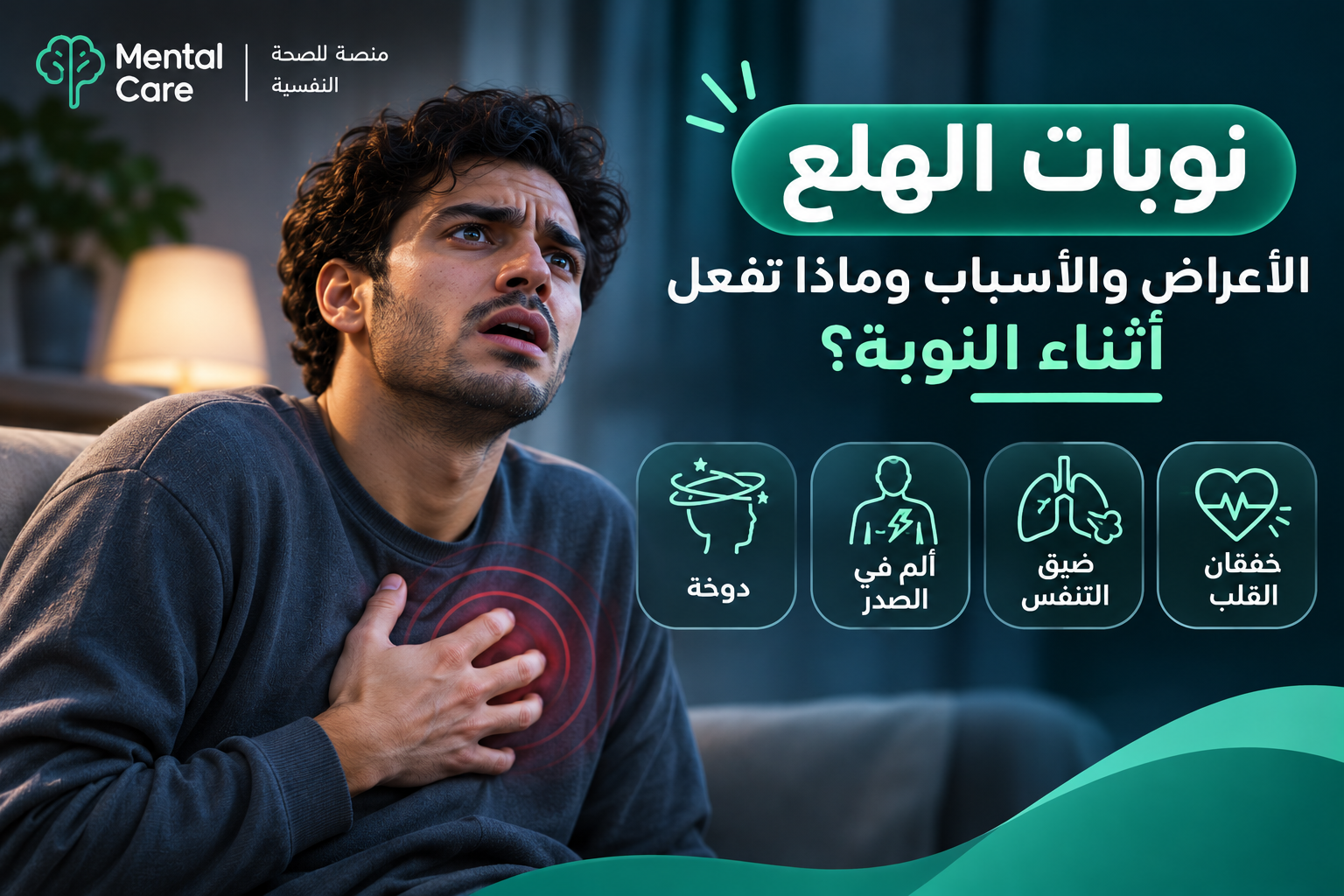


In short: A panic attack is a sudden surge of intense fear or discomfort that may cause a racing heart, chest discomfort, shortness of breath, dizziness, trembling, sweating and a powerful fear of losing control or dying. Symptoms usually peak within minutes and then gradually decrease. Panic attacks themselves are generally not life-threatening, but their symptoms can overlap with serious medical conditions, so new or severe chest pain, breathing difficulty or fainting should never automatically be assumed to be panic.
You may be sitting quietly, driving, working or shopping when your heart suddenly begins racing.
Your breathing changes. Your hands shake. You feel dizzy.
Then a frightening thought appears:
“Something is seriously wrong.”
Or:
“I'm going to die.”
Or:
“I'm losing control.”
The symptoms may begin to settle after several minutes, but fear of another attack may remain long after the episode ends.
This Mental Care guide explains panic attacks, their symptoms and possible causes, what you can do during an attack, the difference between a panic attack and panic disorder, and when symptoms require urgent medical assessment.
What is a panic attack?
A panic attack is a sudden period of intense fear or discomfort accompanied by physical and psychological symptoms.
Attacks may occur unexpectedly, sometimes without an obvious immediate danger.
This can make them especially frightening because the body appears to react as though something dangerous is happening even when the person cannot identify a clear threat.
What are the symptoms of a panic attack?
Symptoms vary between people and may include:
- Racing or pounding heart.
- Chest pain or discomfort.
- Shortness of breath.
- A choking sensation.
- Sweating.
- Trembling or shaking.
- Dizziness or light-headedness.
- Nausea or stomach discomfort.
- Hot flashes or chills.
- Numbness or tingling.
- Feeling that surroundings are unreal.
- Feeling detached from yourself.
- Fear of losing control.
- Fear of dying.
Not every symptom has to occur during every attack.
How long does a panic attack last?
Panic attacks typically begin quickly and reach peak intensity within minutes.
Many attacks last approximately 5 to 20 minutes, although some can continue longer.
It is also common to feel tired or drained after the attack subsides.
Why does a panic attack feel like I am dying?
The physical symptoms can be extremely intense.
A racing heart, shortness of breath, dizziness and chest discomfort are easily interpreted as signs of severe danger.
A cycle may then develop:
Physical sensation → frightening interpretation → more fear → stronger physical symptoms → more frightening interpretation.
This can make the experience feel overwhelming even when the attack itself is temporary.
The attack ended, but are you constantly waiting for the next one?
For many people, the fear of another attack and the avoidance that follows become more disruptive than the attack itself.
Browse SpecialistsWhat causes panic attacks?
There is no single cause that explains every panic attack.
Several factors may play a role, including:
- Genetic vulnerability.
- Differences in the brain and body's fear response.
- Severe or prolonged stress.
- Difficult life experiences.
- Heightened sensitivity to bodily sensations.
- Certain medical conditions.
- Some medications or stimulants.
In some cases, an attack occurs without a trigger the person can clearly identify.
Can caffeine trigger panic symptoms?
Caffeine is a stimulant and may increase heart rate, shakiness or feelings of tension in some people.
These sensations overlap with common anxiety symptoms and may be especially uncomfortable for someone who is highly sensitive to bodily changes.
If you consistently notice that high caffeine intake worsens your symptoms, reducing intake may be worth discussing with a healthcare professional.
What is the difference between anxiety and a panic attack?
Panic attacks often have a sudden onset, high intensity and prominent physical symptoms that peak quickly.
Anxiety can develop more gradually and may last longer, often involving worry about an ongoing problem or future possibility.
However, accurate assessment depends on symptoms and context rather than the label a person uses.
What is the difference between a panic attack and panic disorder?
Having one panic attack does not mean that you have panic disorder.
Some people experience one or several attacks during a stressful period and never develop an ongoing disorder.
Panic disorder generally involves recurrent, unexpected panic attacks together with ongoing concern about future attacks or significant behavioral changes because of them.
A person may begin avoiding:
- Driving.
- Public transport.
- Shopping centers.
- Exercise because it increases heart rate.
- Places far from home or medical care.
Are panic attacks dangerous?
Panic attacks themselves are generally not life-threatening.
However, the symptoms may overlap with symptoms of serious medical conditions.
This means you should not diagnose chest pain or breathing difficulty as panic based only on a previous history of anxiety.
Panic attack or heart problem: how can I tell?
There is no safe way for a non-clinician to guarantee the difference based on symptoms alone.
Both panic attacks and heart problems may cause chest discomfort, racing heart, shortness of breath, sweating or dizziness.
Seek urgent medical assessment for chest pain that is:
- New or unusual.
- Severe or sudden.
- Persistent.
- Spreading to an arm, jaw, back or neck.
- Associated with severe shortness of breath.
- Associated with significant sweating or nausea.
- Associated with fainting or near-fainting.
Do not assume that symptoms are psychological simply because you have experienced panic attacks before.
Can panic attacks happen during sleep?
Yes.
Some people wake from sleep with intense fear, racing heart, breathlessness or other panic symptoms.
These are sometimes described as nocturnal panic attacks.
However, nighttime breathlessness or palpitations can have other causes, including sleep disorders and medical conditions, so recurrent episodes deserve assessment.
What should I do during a panic attack?
Remind yourself that the episode will pass
If your symptoms have already been medically assessed and you know you experience panic attacks, reminding yourself that the attack is temporary may reduce additional fear.
Slow your breathing
Rapid breathing can contribute to dizziness, tingling and a sensation of not getting enough air.
Allow your breathing to become slower and more comfortable without forcing extremely deep breaths.
Ground yourself in the present environment
Shift attention toward things that are physically present.
Notice:
- What you can see.
- What you can hear.
- What you can touch.
- The feeling of your feet on the ground.
Grounding may help reduce complete focus on internal sensations.
Do not fight every sensation
Trying desperately to force symptoms to disappear may increase monitoring and fear.
Where medically appropriate, allowing sensations to rise and fall while reminding yourself they are temporary can be more helpful.
Prioritize safety while driving
If severe symptoms begin while you are driving, pull over somewhere safe when possible.
Are you avoiding entire places because you fear another attack?
Avoidance may provide short-term relief, but over time it can allow fear to occupy a larger part of your life.
Do I Need Therapy?Should I breathe into a paper bag?
Using a paper bag is not recommended as a general response to breathlessness.
Someone may be experiencing a medical problem rather than anxiety-related hyperventilation.
A safer approach is to slow breathing comfortably and seek medical assessment when symptoms are new, severe or unusual.
Can panic attacks be prevented?
No strategy can guarantee that another attack will never occur.
However, appropriate treatment can reduce attack frequency, intensity and fear of future attacks.
Helpful measures may include:
- Following the recommended treatment plan.
- Reducing caffeine if it worsens symptoms.
- Maintaining regular sleep.
- Addressing ongoing stress.
- Regular physical activity when medically appropriate.
- Avoiding the use of alcohol or non-prescribed medication as a way of managing fear.
How is panic disorder diagnosed?
There is no single blood test or online quiz that confirms panic disorder.
A professional assessment may explore:
- What happens during attacks.
- How often they occur.
- Whether they are unexpected.
- How much you fear another attack.
- Whether you avoid situations because of them.
- Medication and stimulant use.
- Possible medical conditions that may produce similar symptoms.
Medical testing may be appropriate when physical causes need to be excluded.
How are panic attacks and panic disorder treated?
Panic disorder is treatable, and treatment depends on the individual.
Psychotherapy
Cognitive behavioral therapy or CBT is commonly used for panic disorder.
It may help people understand the relationship between bodily sensations, catastrophic interpretations, fear and avoidance.
Medication
A psychiatrist may recommend medication in some cases.
Medication choice, dose and duration should be determined by a qualified clinician.
Do not start, stop or change psychiatric medication without professional guidance.
Why does fear of the next attack keep the problem going?
After a frightening attack, you may begin constantly monitoring your body.
A small increase in heart rate may trigger:
“The attack is starting.”
Fear then increases the heart rate further.
Over time, the person may begin fearing not only panic attacks but ordinary bodily sensations that resemble the beginning of one.
This is one of the patterns psychotherapy can address.
Does avoidance help?
Avoidance can provide immediate relief.
If an attack happened in a shopping center, you may stop going there.
Then you may avoid public transport.
Then places far from home.
Gradually, your world can become smaller.
Treatment may therefore focus both on panic symptoms and on gradually reversing avoidance in a safe and structured way.
What is the connection between panic disorder and agoraphobia?
Some people who fear future panic attacks begin avoiding situations where they believe escape may be difficult or help may not be easily available.
This can be associated with agoraphobia in some cases.
Not everyone with panic attacks develops agoraphobia.
When should I speak with a mental health professional?
Consider professional assessment if:
- Panic attacks are recurring.
- You spend significant time worrying about another attack.
- You avoid activities or places because of fear.
- Work or education is being affected.
- Fear is interfering with sleep.
- You repeatedly seek reassurance despite appropriate medical assessment.
- You have started using alcohol or non-prescribed medication to manage panic.
Therapist or psychiatrist?
Psychotherapy may be appropriate for panic symptoms, fear and avoidance.
A psychiatrist may be particularly useful when medical psychiatric assessment or medication is being considered.
Some people benefit from working with both.
Learn more: Therapist vs Psychiatrist: What's the Difference?
You do not have to spend every day waiting for the next attack
If panic attacks or fear of another attack are changing your decisions and daily life, professional assessment can help you understand the pattern and choose the right treatment.
Browse SpecialistsFrequently asked questions about panic attacks
What is a panic attack?
A panic attack is a sudden surge of intense fear or discomfort that may involve racing heart, shortness of breath, dizziness, sweating, chest discomfort and fear of losing control or dying.
How long does a panic attack last?
Many attacks last approximately 5 to 20 minutes, although some may continue longer.
Can a panic attack kill you?
Panic attacks themselves are generally not life-threatening, but similar symptoms may occur in serious medical conditions, so new or severe symptoms require appropriate assessment.
How can I tell a panic attack from a heart problem?
You cannot safely guarantee the difference based on symptoms alone. New, severe or persistent chest pain, particularly with significant breathlessness, sweating, nausea, fainting or spreading pain, needs urgent medical assessment.
What should I do during a panic attack?
If the condition has already been medically assessed, remind yourself that the attack is temporary, slow your breathing comfortably, use grounding and remain somewhere safe until symptoms decrease.
What is the difference between a panic attack and panic disorder?
A panic attack can occur once or occasionally, while panic disorder generally involves recurrent unexpected attacks together with persistent fear of future attacks or behavioral changes because of them.
Can panic disorder be treated?
Yes. Treatment may include psychotherapy such as CBT, and medication may be used in some cases under medical supervision.
When should I seek medical help?
Seek urgent assessment for new or unusual symptoms, severe or persistent chest pain, severe breathing difficulty or fainting. Seek mental health support when panic attacks recur or significantly affect daily life.
Read more on Mental Care
- Psychological and Physical Symptoms of Anxiety
- Normal Anxiety vs Anxiety Disorder
- How Do You Know If You Need Therapy?
- How to Choose the Right Therapist
- Therapist vs Psychiatrist
- Browse Mental Care Specialists
Content last updated: November 8, 2026
Medical notice: This article is educational and cannot diagnose a panic attack or rule out physical illness. New, severe or persistent chest pain, severe shortness of breath, fainting or unusual symptoms require urgent medical assessment. Do not assume symptoms are psychological simply because you have anxiety or previous panic attacks.


