

Sometimes stress does not feel like a major problem.
You tell yourself: “It's just a busy week.”
But the busy week becomes a month, then several months.
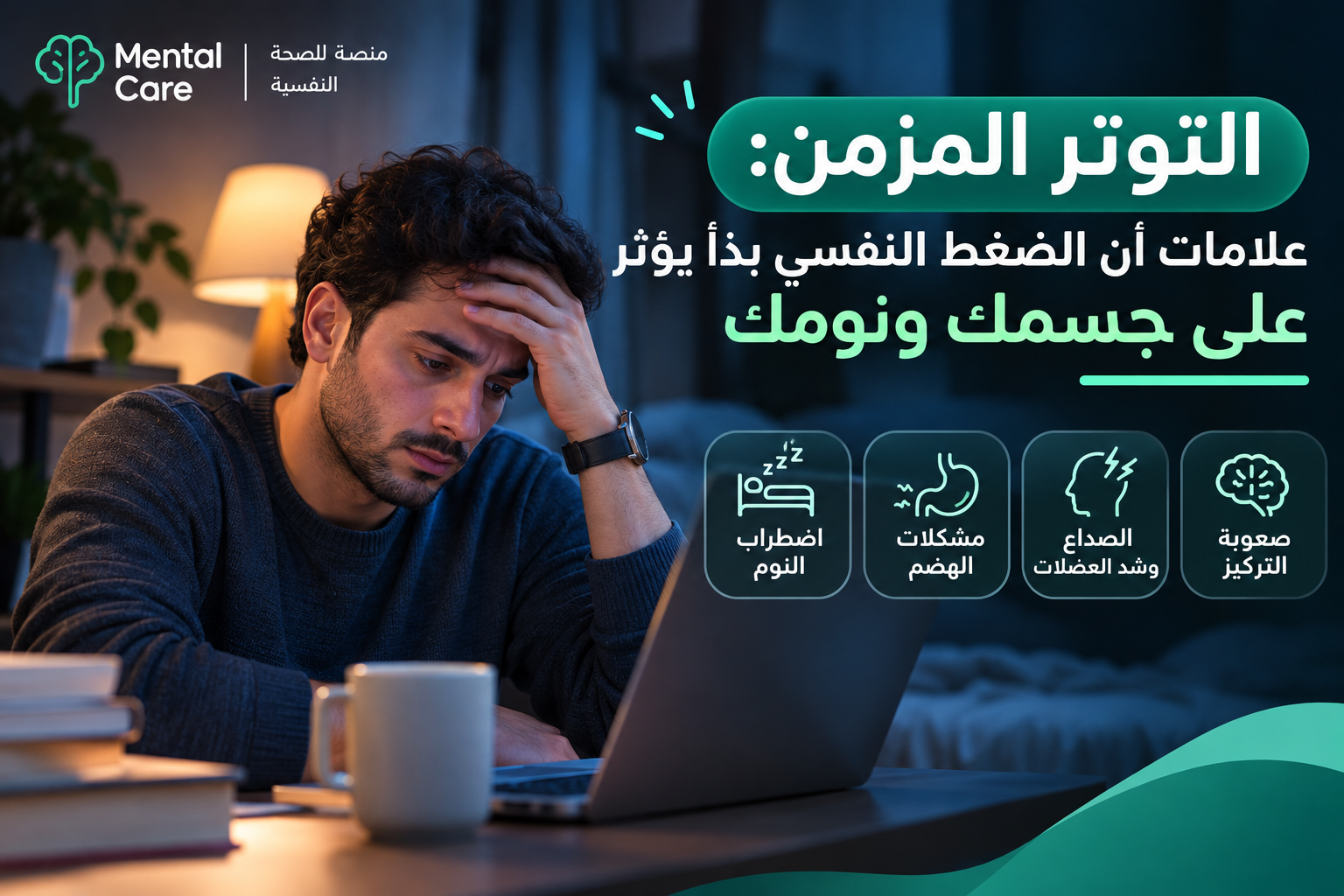
You go to bed thinking about work, wake up tired, notice tension in your shoulders, struggle to concentrate and become irritated more easily.
Eventually, you may become so used to functioning under pressure that it starts to feel normal.
This Mental Care guide explains chronic stress, how it differs from temporary stress, how prolonged stress may affect sleep, mood and the body, and when professional help may be appropriate.
What is chronic stress?
Stress is the body's psychological and physiological response to demands, challenges or perceived threats.
Short-term stress can sometimes be useful. It can increase alertness, motivation and readiness to respond.
Chronic stress occurs when a stressor, or the body's response to it, continues for a prolonged period.
Examples may include:
- Ongoing work pressure.
- Financial difficulties.
- Long-term caregiving.
- Persistent family conflict.
- An emotionally draining relationship.
- Job insecurity.
- Academic pressure.
- Too many responsibilities without adequate recovery time.
Chronic stress does not always come from one dramatic event. It can develop from many smaller pressures repeated every day.
What is the difference between normal stress and chronic stress?
Temporary stress usually has a recognizable trigger and a clearer beginning and end.
Examples include an examination, interview, deadline or short-term difficult situation.
When the challenge passes, the stress response normally begins to settle.
With chronic stress, the mind and body may have insufficient time to return to baseline before the next stressor arrives.
You may begin to feel constantly “on,” even when there is no immediate danger.
How does chronic stress affect the body?
The stress response involves the nervous system, hormones, heart, breathing, muscles and other body systems.
This response is useful when it is temporary.
When it remains activated repeatedly over long periods, it may contribute to physical and psychological strain.
What are physical symptoms of chronic stress?
Experiences may include:
- Persistent fatigue.
- Headaches.
- Neck, shoulder or back tension.
- Heart racing or palpitations in some people.
- Digestive discomfort.
- Changes in appetite.
- Sleep difficulties.
- A general sense of being physically tense.
These symptoms are not unique to stress.
Headaches, chest symptoms, palpitations, digestive problems and fatigue may have medical causes and should be assessed when persistent, severe or unusual.
Have you become so used to stress that you barely notice it?
Getting used to pressure does not necessarily mean your mind and body are recovering from it. If stress has become constant, professional support may help you understand what is maintaining it.
Browse SpecialistsHow does chronic stress affect sleep?
Stress and sleep can affect each other in both directions.
When you are stressed, your mind may remain alert even after you get into bed.
Thoughts may include:
- What do I need to do tomorrow?
- What if I cannot finish everything?
- How will I solve this problem?
- Did I forget something important?
This may make it difficult to fall asleep or contribute to fragmented sleep.
The next day, insufficient sleep can reduce your ability to tolerate frustration and regulate emotions.
A cycle may develop:
More stress → poorer sleep → less capacity to cope → more stress.
Is racing thinking at bedtime a sign of stress?
Thinking before sleep is normal.
However, if you repeatedly spend long periods reviewing work, problems or future scenarios and cannot disengage from them, this may reflect elevated stress or anxiety.
It becomes more important when it significantly interferes with sleep.
Can stress cause headaches?
Stress may contribute to headaches in some people, particularly when it leads to prolonged muscle tension around the neck, shoulders and head.
Headaches have many possible causes, however.
A new, severe, unusual or persistent headache should be medically assessed rather than assumed to be caused by stress.
Can stress cause neck and back pain?
Muscles tend to tighten during the stress response.
If this tension occurs repeatedly, some people develop discomfort or stiffness in the neck, shoulders, jaw or back.
Persistent pain should still be assessed appropriately.
Can stress affect the stomach?
The nervous and digestive systems communicate closely.
During stressful periods, some people notice:
- Stomach discomfort.
- Bloating.
- Changes in bowel habits.
- Heartburn or reflux.
Stress can also worsen symptoms of some existing digestive conditions.
Persistent or severe symptoms require medical assessment.
How can chronic stress affect concentration and memory?
When your attention is repeatedly focused on a stressor, less mental capacity may be available for other tasks.
You may notice:
- Forgetting small details.
- Difficulty concentrating.
- Reading the same paragraph repeatedly.
- Switching between tasks without finishing them.
- Feeling mentally foggy.
Poor sleep can intensify these difficulties.
Can stress make you more irritable?
Yes.
Persistent stress may reduce your tolerance for frustration.
You may become more reactive with family, colleagues or other drivers, or feel increasingly overwhelmed by noise and interruptions.
Sometimes people believe their personality has changed when chronic exhaustion and stress are part of the picture.
Your body is tired, but your mind will not switch off?
If pressure and overthinking are affecting sleep, concentration and mood, therapy may help you understand your stressors and develop more effective ways to respond.
Do I Need Therapy?Can chronic stress cause anxiety or depression?
Chronic stress is not the same as an anxiety disorder or depression.
However, prolonged stress may be associated with increased mental health difficulties in some people.
Pay attention if you develop:
- Persistent anxiety that is difficult to control.
- Long-lasting low mood.
- Loss of interest or pleasure.
- Social withdrawal.
- Hopelessness.
- Significant difficulty functioning in everyday life.
At that point, it may be inappropriate to dismiss everything as “just stress.”
How do I know if my stress has become chronic?
There is no single duration that applies to everyone.
Consider asking:
- Do I feel under pressure most days?
- Has my sleep changed?
- Am I more irritable than usual?
- Is my concentration worse?
- Do I have little opportunity to recover?
- Is stress affecting my relationships or work?
- Do I remain physically tense even when the immediate stressor is gone?
The more stress disrupts normal life, the more important it becomes to address it.
How can chronic stress be managed?
Identify your main stressors
Writing down the situations that repeatedly drain your energy may help transform a vague sense that “everything is stressful” into more specific problems.
Separate what you can and cannot control
Some circumstances can be changed directly, while others cannot.
Focusing effort on areas where you have influence may reduce helplessness.
Set boundaries
Stress can increase when you repeatedly accept more responsibilities than you can realistically manage.
Boundaries around work, availability and commitments may reduce overload.
Protect your sleep
Try to maintain reasonably consistent sleep and wake times and reduce late caffeine, work and highly activating content.
Move regularly
Regular physical activity can support general health and stress management.
It does not need to be intense; walking may be a practical starting point for many people when medically appropriate.
Create recovery time
Rest is not something you can only have after every responsibility has been completed.
If your responsibilities are endless, waiting for the perfect time to rest may mean never resting at all.
Stay connected
Talking with supportive people may not remove the stressor, but it can reduce isolation and help you think more clearly about your options.
Do breathing exercises cure chronic stress?
Breathing and relaxation techniques can help reduce physiological arousal in the moment.
They do not solve every cause of chronic stress.
If the main stressor is an unsafe relationship, severe financial strain or an unsustainable workplace, relaxation alone will not remove that underlying problem.
These techniques are best considered tools within a broader plan.
When should I speak with a mental health professional?
Professional support may be helpful when:
- Stress has continued for a long time.
- You cannot relax even when you have the opportunity.
- Your sleep is consistently disrupted.
- You are increasingly irritable.
- Work, study or relationships are being affected.
- You are developing anxiety or depressive symptoms.
- Your usual coping strategies are no longer enough.
A mental health professional can help identify stressors, examine patterns of thinking and behavior, and develop more effective coping strategies.
When should physical symptoms be assessed medically?
Do not assume that a new physical symptom is caused by stress.
Seek appropriate medical assessment for persistent or concerning symptoms and urgent help when symptoms are sudden or severe, including significant chest pain, severe breathing difficulty, fainting, unusual severe headache or sudden neurological symptoms.
If you are unsure whether you need a therapist or psychiatrist, read: Therapist vs Psychiatrist
You do not have to wait until your body forces you to stop
If stress is persistently affecting your sleep, concentration and relationships, professional support can help you understand what is happening and decide what needs to change.
Browse SpecialistsFrequently asked questions about chronic stress
What is chronic stress?
Chronic stress is a prolonged psychological or physiological response to ongoing stressors without enough time for recovery.
What are the symptoms of chronic stress?
Possible symptoms include fatigue, sleep problems, headaches, muscle tension, difficulty concentrating, irritability and digestive symptoms. These symptoms can have other causes and may require medical assessment.
Can stress cause insomnia?
Stress can increase alertness and racing thoughts, making it harder to fall asleep or stay asleep. Poor sleep may then make coping with stress more difficult.
Can stress affect digestion?
Stress may contribute to digestive discomfort, bloating, reflux or changes in bowel habits in some people, but persistent symptoms should be medically assessed.
Can chronic stress cause depression?
Chronic stress is not depression, but prolonged stress may be associated with increased mental health difficulties. Persistent depressive symptoms require separate assessment.
How can I reduce chronic stress?
Useful approaches may include identifying stressors, improving sleep, regular movement, setting boundaries, creating recovery time, relaxation techniques and professional support when needed.
When should I seek help?
Consider professional help when stress persists, disrupts sleep or normal functioning, affects relationships, or is accompanied by significant anxiety or low mood.
Read more on Mental Care
- Psychological and Physical Symptoms of Anxiety
- How Do You Know If You Need Therapy?
- How to Choose the Right Therapist
- Therapist vs Psychiatrist
- Browse Mental Care Specialists
Content last updated: November 8, 2026
Medical notice: This article is educational and does not diagnose the cause of physical or psychological symptoms. New, severe or persistent physical symptoms should not automatically be attributed to stress and may require appropriate medical assessment.


